



Sleep as Medicine: How a Sleep-Centric Lifestyle Drives Metabolic Health & Cellular Vitality
Sleep-centric. When most people think about improving their metabolic health, their minds jump straight to diet trends. Like, caloric restrictions, or intense workout routines. While nutrition and movement are undeniable pillars of health. There is an overarching master control system that dictates how well your body utilizes food and energy: your sleep and circadian rhythms.
If you are struggling with brain fog, persistent fatigue, stubborn metabolic stagnation, or hormonal imbalances, the root cause may lie in chronic sleep fragmentation.
In this guide, we explore the deep physiological connection between sleep, circadian biology, and metabolic health—and how adopting a sleep-centric lifestyle can unlock true cellular vitality.
The Circadian Connection: Master Clocks vs. Peripheral Clocks
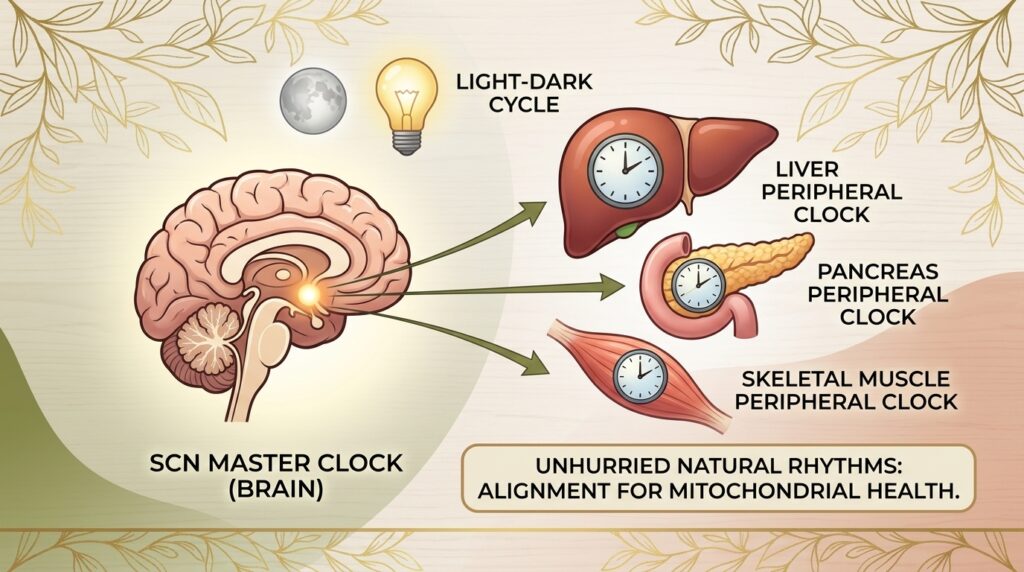
Your body operates on an intricate, 24-hour internal clock system controlled by the Suprachiasmatic Nucleus (SCN) in the brain (the master clock) and individual peripheral clocks located in every organ and cell type—including your liver, pancreas, gut, and skeletal muscle.
When your daily behaviors align with natural light-dark cycles:
-
Morning light triggers a healthy cortisol surge and suppresses melatonin, signaling your metabolic machinery to start processing nutrients efficiently.
-
Evening darkness prompts the pineal gland to release melatonin, which not only prepares the brain for restorative sleep but acts as a powerful mitochondrial antioxidant.
When shift work, late-night screen light, or irregular meal schedules disrupt this timing, a phenomenon known as circadian misalignment occurs. The master clock in your brain and the peripheral clocks in your metabolic organs begin receiving conflicting signals, leading to metabolic dysfunction.
3 Ways Poor Sleep Sabotages Your Metabolism
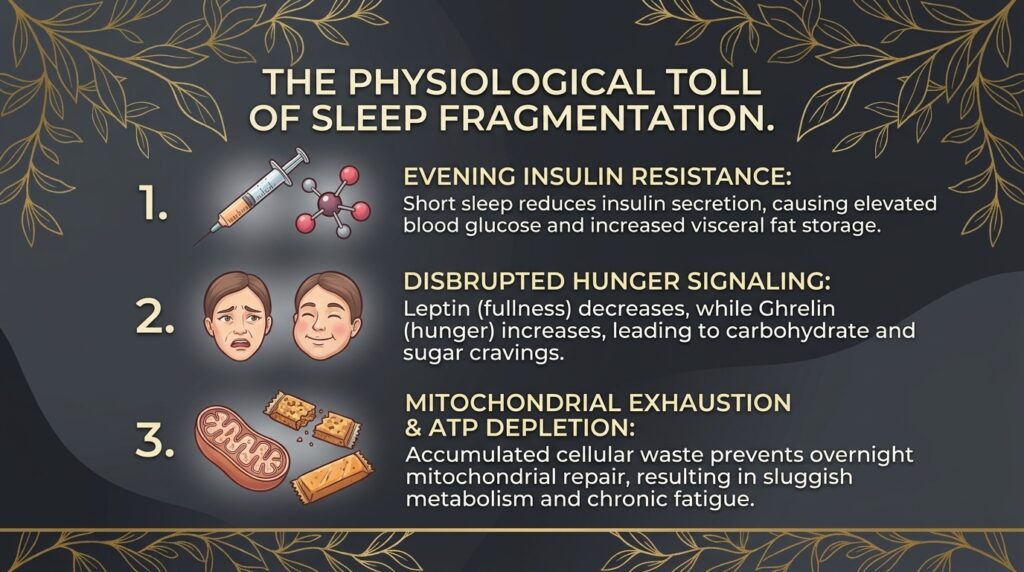
1. Evening Insulin Resistance
Your body is biologically hardwired to process carbohydrates and glucose much more efficiently during daylight hours. As evening approaches and melatonin rises, pancreatic beta cells reduce insulin secretion. Eating late at night or experiencing broken sleep creates a state of temporary insulin resistance, causing elevated blood glucose levels and increased fat storage.
2. Disrupted Hunger Signaling
Sleep deprivation alters the key hormones that regulate appetite and satiety:
-
Leptin: The hormone that signals to your brain that you are full decreases.
-
Ghrelin: The hormone that stimulates appetite increases.
This hormonal shift is why short nights almost always lead to intense cravings for fast-acting carbohydrates and sugar the next day—your starving cells are searching for quick energy.
3. Mitochondrial Exhaustion & ATP Depletion
Deep, slow-wave sleep is when your cells perform vital cleanup (autophagy) and repair damaged mitochondria—the powerhouses responsible for producing cellular energy (ATP). Without sufficient deep sleep, cellular waste accumulates, resulting in sluggish metabolism and chronic fatigue.
Building a Sleep-Centric Lifestyle: The Metabolic Reset Approach
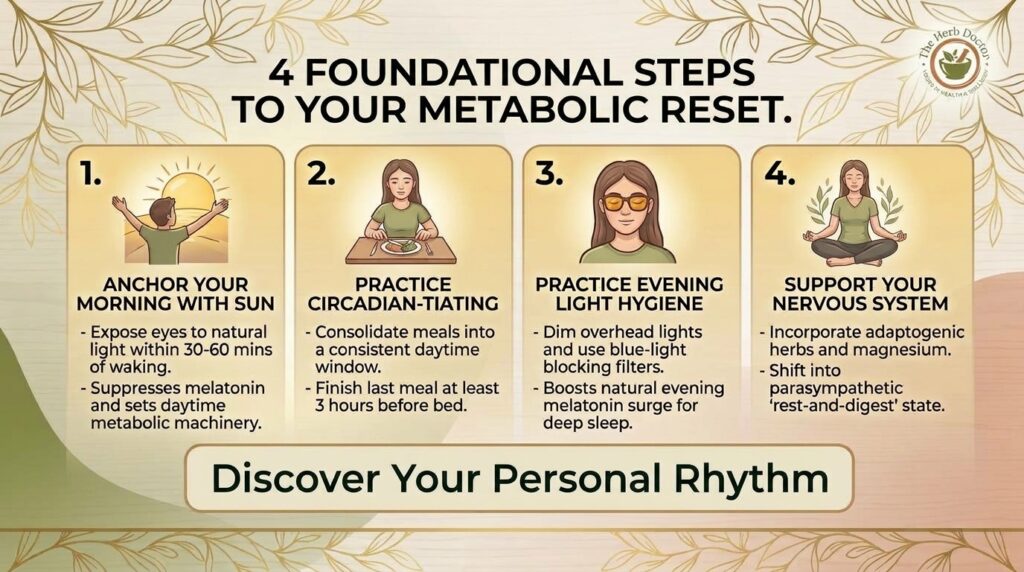
At The Herb Doctor Consulting, we utilize the Metabolic Reset Method to help midlife women and busy professionals realign their physiological rhythms for lasting healing. Here are four foundational steps to start prioritizing sleep as a metabolic therapy:
1. Anchor Your Morning with Sun
Expose your eyes to natural outdoor light within 30–60 minutes of waking (without sunglasses). This sets your SCN master clock, boosts morning alertness, and sets a timer for natural melatonin production 12–14 hours later.
2. Practice Circadian-Timed Eating
Consolidate your meals into a consistent 8-to-10-hour daytime window. Aim to finish your last meal at least 3 hours before bed so your gastrointestinal peripheral clocks can shift from digestion to nocturnal repair.
3. Practice Evening Blue Light Hygiene
Dim overhead lights 2 hours before bed and limit exposure to blue light from smartphones, tablets, and televisions. Consider using amber or red-tinted glasses in the evening to protect your natural melatonin surge.
4. Support Your Nervous System
Nervous system hyper-arousal and elevated nighttime cortisol are major contributors to nocturnal waking. Incorporating adaptogenic herbs, magnesium glycinate, and slow diaphragmatic breathing routines before bed helps shift your body into a parasympathetic (rest-and-digest) state.
Stop Guessing, Start Resetting
If you’ve been told your lab results are “normal” but you still feel exhausted and stuck, it’s time to look deeper. Normal isn’t a finding when your metabolic health is suffering. By honoring your body’s unhurried natural rhythms and treating sleep as foundational medicine, you can restore your energy, balance your hormones, and achieve sustainable wellness.